
Juliette Dumas
TERRA
June 2026
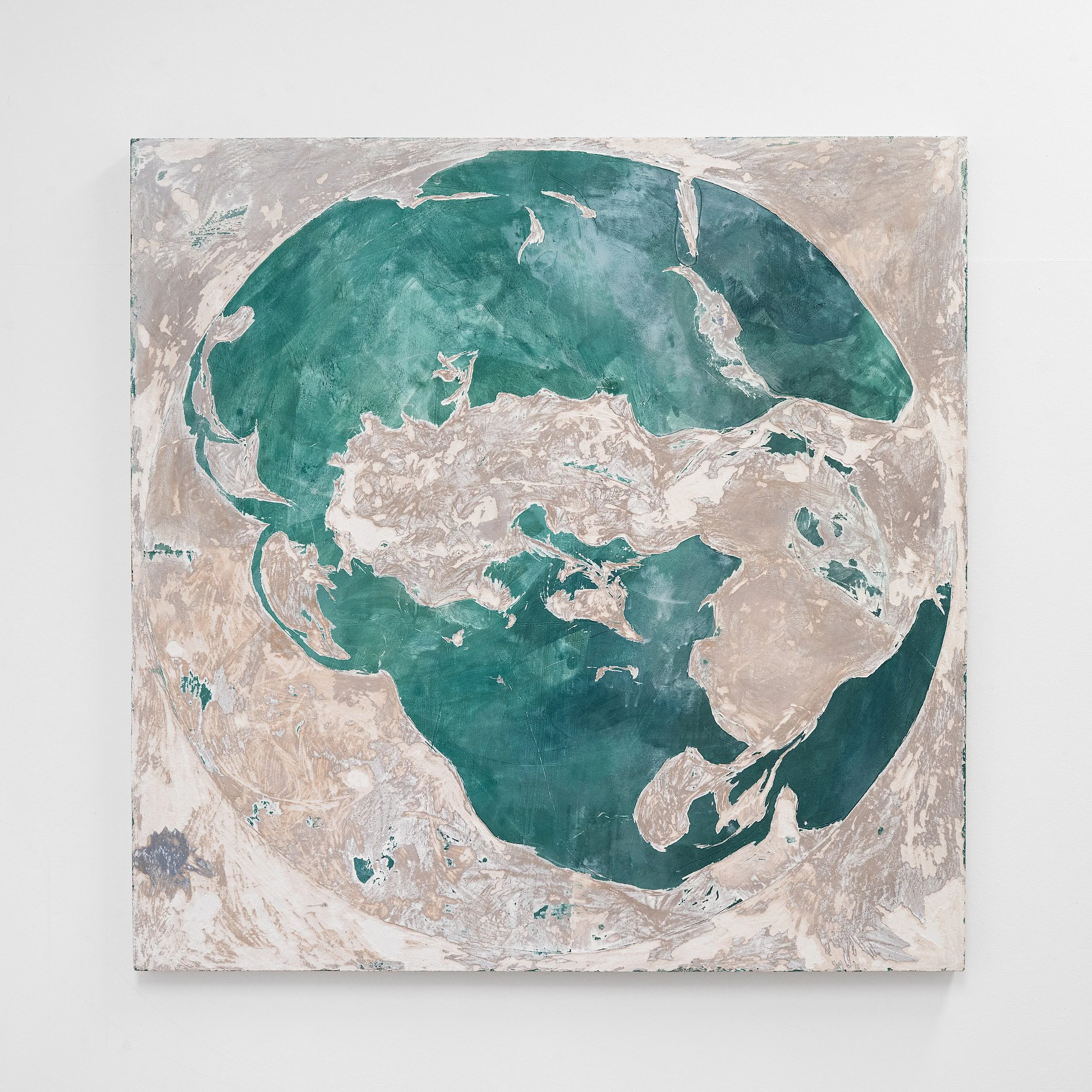
Juliette Dumas, Terra (Nemonte), 153 x 153 x 5,5 cm, 2025, Buon fresco on wooden panel.
In her previous acclaimed work “Megaptera”, Juliette Dumas turned toward the whale fluke — the great wings of the ocean — as a living surface of memory. Each fluke carried the marks of a life: scars from predators, fishing gear, boat collisions, and the passage of their immense body moving through water. In these monumental works, Dumas transformed the wounded skin of the whale into a natural calligraphy — an image of endurance, resilience, and planetary consciousness.
With her newest body of work, Terra, this meditation rises from the depths and returns to the Earth.
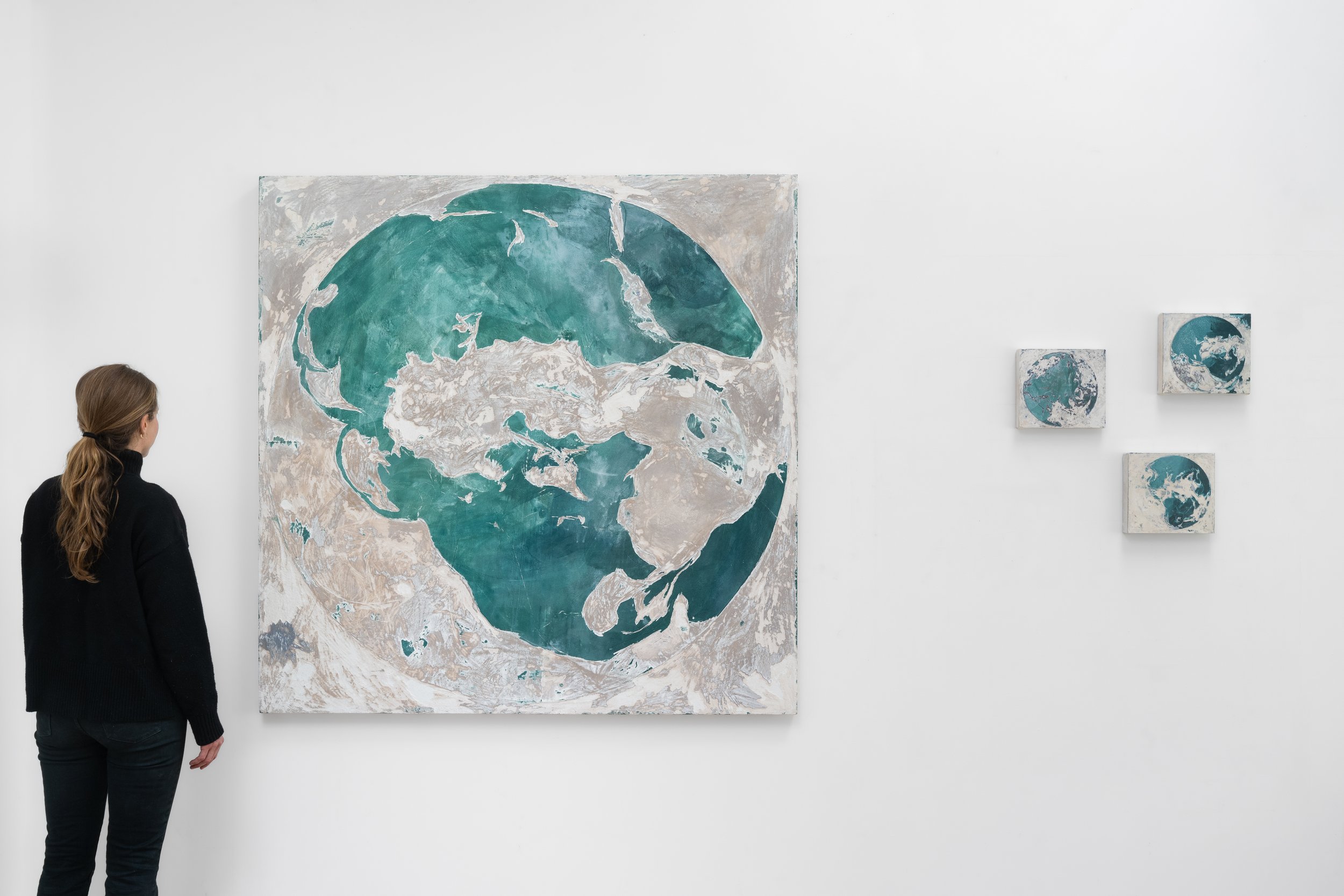
Juliette Dumas, Terra (Nemonte), 153 x 153 x 5,5 cm, 2025, Buon fresco on wooden panel.
The transition from whale to Terra is a deepening of Dumas’s long-standing commitment to what Integral Naturalism calls “the expression of a planetary consciousness” — a consciousness capable of indignation, mobilization, and action. If Megaptera asked us to read the scars of the ocean, Terra asks us to contemplate the Earth itself: not as territory, landscape, or resource, but as a living body to be loved, protected, and imagined into the future.
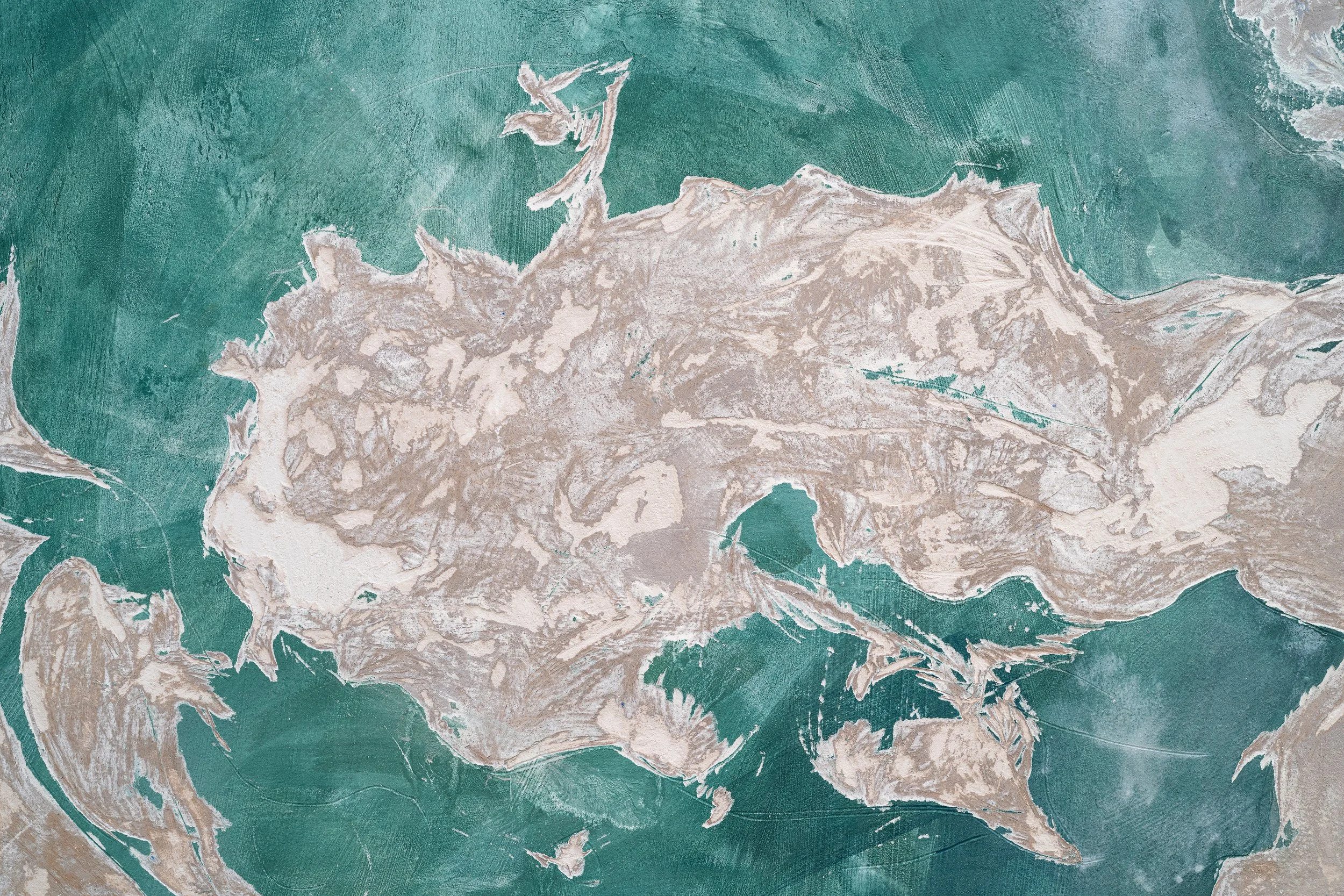
To represent this sacred body, Dumas chooses fresco on wooden panels — an ancient technique using lime, sand, and natural pigments. Historically linked to Giotto’s church walls and the Minoan frescoes of Akrotiri, fresco allows the artist to work into a wet surface for a brief, living moment. In a process that takes years, Dumas carves, scratches, and reveals the image as if engraving her gesture into stone. The painting becomes mineral, physical, and enduring: a way of weaving our relationship to the Earth into the deep time of the future.
The ability to contemplate the Earth is recent in human history. Since the first photographs of our planet taken from Apollo 8 in 1968, humanity has been able to experience the “Overview Effect”: the profound emotion of seeing the Earth from above and falling in love with it as one fragile, luminous whole.
In Terra, Dumas brings that vision back into painting. The Earth becomes sacred image, icon, and support for collective visualization.
Juliette Dumas, Terra (Nemonte) and Three small Studies.
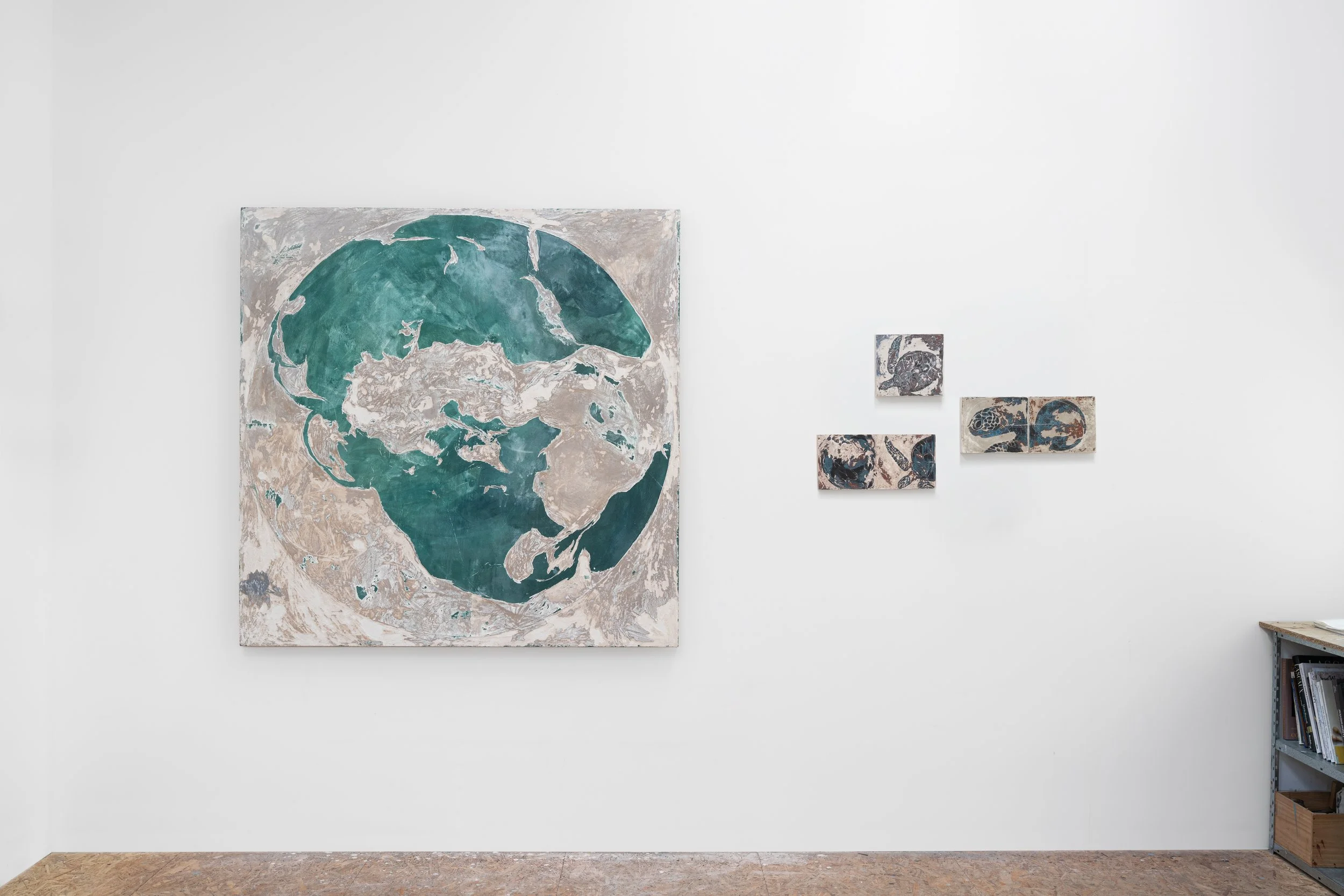
Juliette Dumas, Terra (Nemonte), 153 x 153 x 5,5 cm, 2025, Buon fresco on wooden panel with Turtles and Terra.
Along with Earth, Terra introduces another powerful symbol of restauration: the Green Turtle.
Present on Earth for 110 million years, the turtle carries an ancient symbolic power. Across cultures and continents, she appears as world-bearer, guardian, and figure of origin: Turtle Island among the Lakota and Huron peoples, Huna among Hawaiians, and the cosmic turtle of Iranian, Tibetan, Indian, and Aztec cosmologies. She is a sign of longevity, fertility, good fortune, and return. Carrying the world and humanity on her back, she embodies stability, protection, and the capacity to find one’s way back to one’s origins.
In Terra, the turtle is also joined by another essential presence: women.

Juliette Dumas, Turtle, 2026, 22,8 x 24,8 x 3,8 cm, clay and pigments on paper mounted on canvas.

Juliette Dumas, Turtle and Terra, 2025, clay and pigments on paper mounted on wood, 19,2 × 24,8 × 3,8 cm
Each painting in the TERRA series is named in homage to a woman who fights for the preservation of the planet. These names root the work in living courage. They remind us that the ecological struggle is not abstract. It is carried by bodies, voices, communities, ancestral knowledge, and acts of resistance.
Here, TERRA (Nemonte) honors Nemonte Nenquimo, the Waorani leader who successfully fought to protect ancestral land from the oil industry in Ecuador. Through this dedication, Dumas links the ancient turtle — bearer of worlds — to the contemporary women who defend the Earth. The painting becomes both image and invocation: a sacred form for the planet, and a tribute to those who protect it.

Juliette Dumas and her sculpture The Gateway (Whale Bones).
There is the powerful continuity from Megaptera to Terra: both bodies of work ask us to look at the natural world not from a distance, but with reverence. The whale fluke carries the memory of the ocean. The turtle carries the memory of the Earth. The women honored in Terra carry the future.
In Megaptera, Dumas gave form to the wounded majesty of the sea.
In Terra, she gives form to the sacred body of the Earth — and to its guardians.
Together, these works reveal an artist moving ever deeper into the spiritual, material, and political language of the living world.
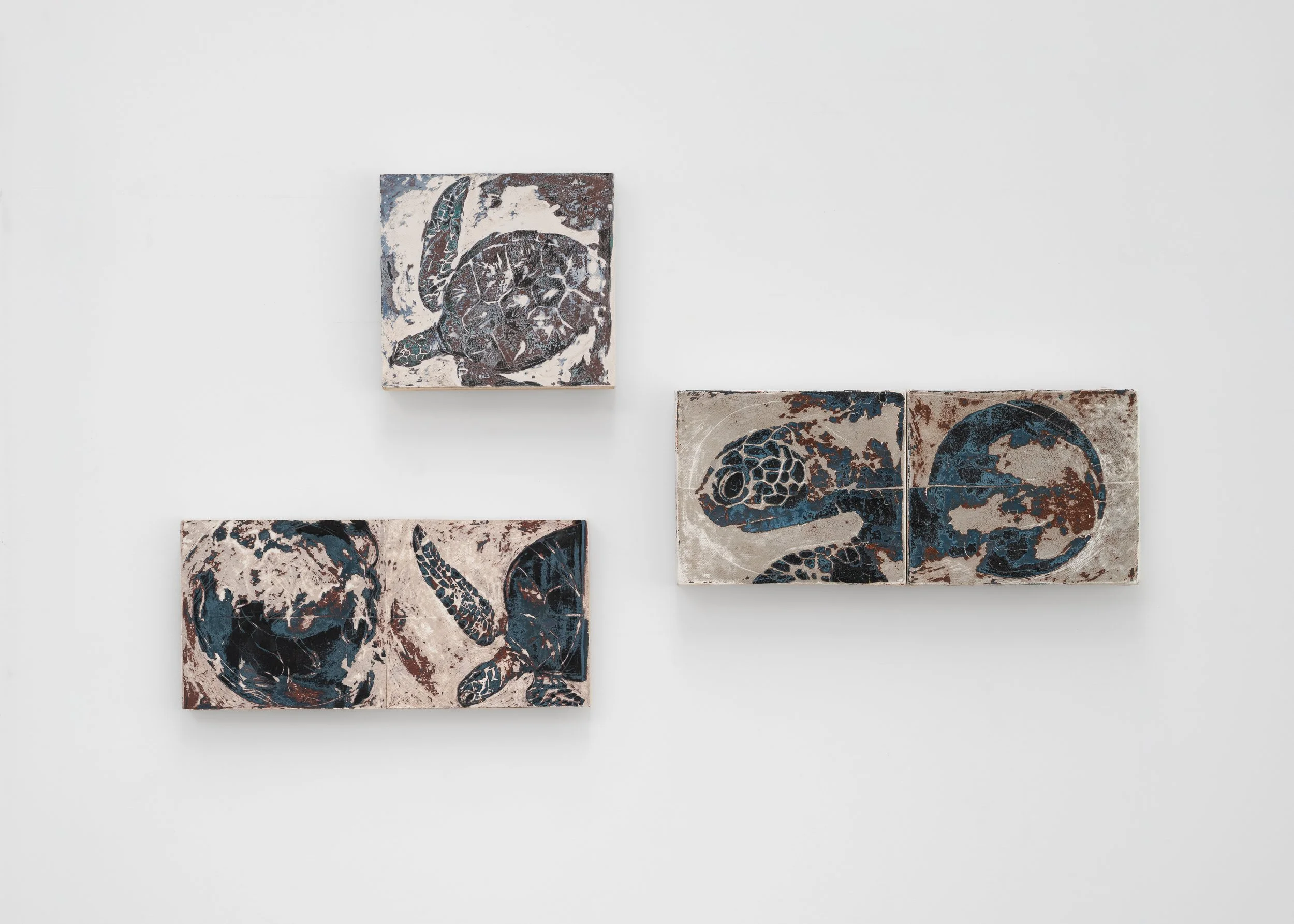
Installation view, Juliette Dumas, Turtles and Terra.
JULIETTE DUMAS
TERRA (NEMONTE), Study 02, 2025
Clay and pigments on paper mounted on canvas
22,8 x 24,7 x 3,8 cm.
SOLD
JULIETTE DUMAS
TERRA, Small Emerald Study, 2024
Clay and pigments on paper mounted on canvas
22,5 x 24,6 x 3 cm.
JULIETTE DUMAS
TURTLE AND TERRA, 2025
Clay and pigments on paper mounted on wood
19,2 x 24,8 x 3,8 cm
JULIETTE DUMAS
TURTLE, 2026
Clay and pigments on paper mounted on canvas
22,8 x 24,7 x 3,8 cm.
JULIETTE DUMAS
TOTI AND TERRA, 2025
Clay and pigments on paper mounted on wood
19,2 x 24,8 x 3,8 cm
SOLD
JULIETTE DUMAS
TERRA (NEMONTE), Study 01, 2025
Clay and pigments on paper mounted on canvas
22,8 x 24,7 x 3,8 cm.
© JULIETTE DUMAS. All Photographs by Holly Fogg.
JULIETTE DUMAS
TERRA (NEMONTE), 2025
Buon Fresco on wood panel
153 × 153 × 5,5 cm.